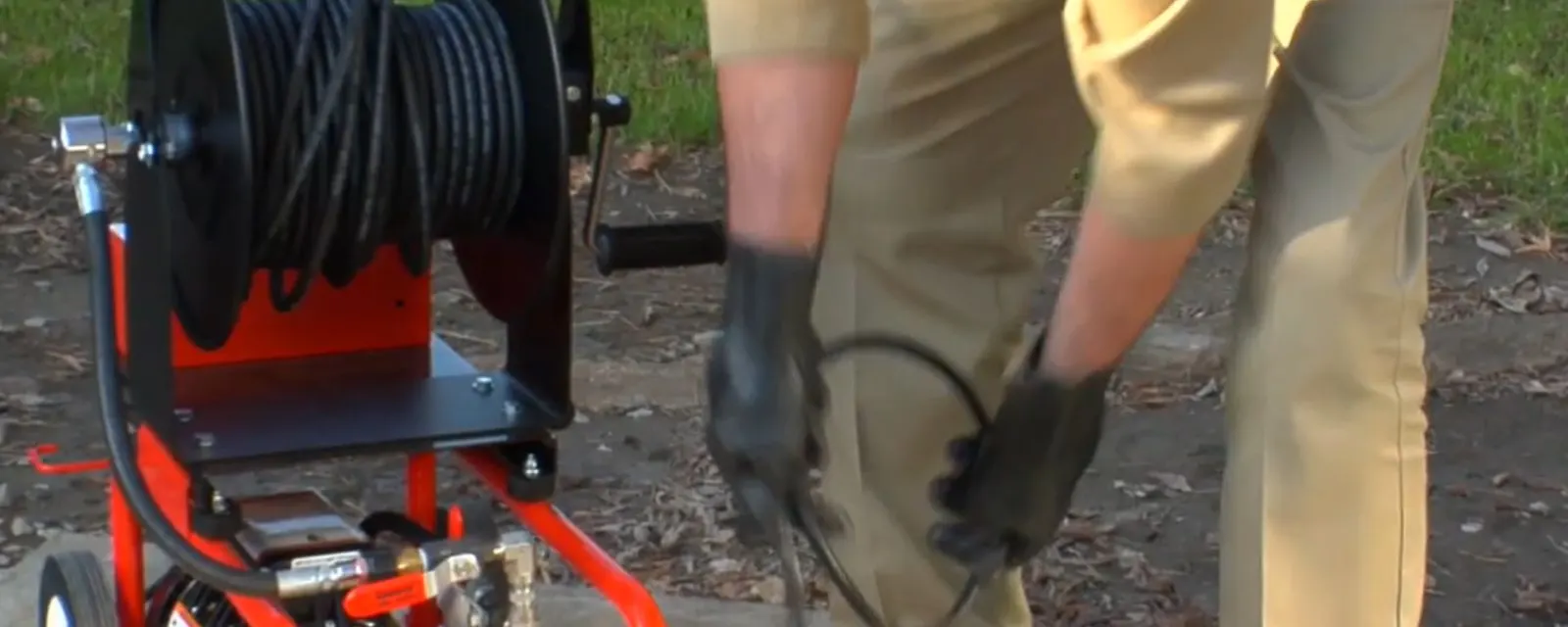
What hydro jetting does
Hydro jetting sends water through the sewer line at high pressure from a nozzle that pulls itself forward. The water scours grease, scale, sludge and roots off the pipe wall. A cable machine punches a hole through a clog. A jet cleans the pipe itself.
That is why people ask whether it is safe for old pipes. The honest answer is that it depends on the pipe. Sound pipes handle it well. Cracked or collapsing pipes can be damaged. Our hydro jetting page covers the service, and this guide covers the old-pipe question.
Which old pipes handle jetting
| Pipe | Condition | Jetting |
|---|---|---|
| Cast iron | Sound with heavy scale | Usually fine |
| Cast iron | Flaking or thin wall | Use caution or avoid |
| Clay | Intact joints | Fine at moderate pressure |
| Clay | Cracked or offset joints | Avoid |
| PVC or ABS | Any | Fine |
| Orangeburg (fiber) | Any | Avoid, replace instead |
The real question is the condition of the pipe, not its age. A camera inspection answers it.
Why we look first
Before we jet an older line we run a camera through it. The video shows cracks, offsets, roots and wall thickness. If the pipe is damaged, jetting could push water into the soil and wash out the ground around the break. In that case we recommend repair, not more pressure.
This is why an inspection often comes before the jet. It also gives you a record to compare against after the cleaning.
Jetting versus snaking
- A cable cuts a hole through a clog and often leaves residue behind.
- A jet clears the full pipe wall and removes the buildup that causes repeats.
- Jetting costs more per visit but can reduce repeat calls.
- A cable is fine for a simple, fresh clog in a sound pipe.
For a one-off sink clog, drain cleaning with a cable is enough. For a main line that keeps blocking, jetting is often the better choice.
Sewer backing up?
Call the 24/7 line in Chelmsford.
What can go wrong and how it is avoided
The main risks are a pipe that was already broken, a nozzle that lodges at an offset joint and water pushed back into the house through open fixtures. We set pressure to the pipe, use the right nozzle, cap or close low fixtures and watch the cleanout during the run.
None of this is exotic. It is the routine care a trained operator takes on every job.
What the process looks like step by step
- Camera inspectionWe look at the pipe first and mark any defects.
- Access and setupWe open the cleanout and set up the jetter and hose.
- Pressure set to the pipeWe start low and raise only as needed.
- Jetting passThe nozzle pulls forward, scouring the walls, then back out with debris.
- Final camera passWe confirm the line is clean and record any damage found.
The two camera passes protect you. The first tells us whether jetting is safe, and the second shows what the cleaning accomplished.
Signs that a line should not be jetted
- Visible cracks, holes or missing pieces of pipe.
- A section that is collapsed or severely bellied.
- Orangeburg or fiber conduit of any age.
- Cast iron that is flaking or paper thin.
- Joints that have separated or shifted.
In those cases we recommend a repair or relining first. A cleaning is not worth the risk of washing out soil around a break.
Aftercare for a freshly jetted line
A clean line stays clean longer when you change the habits that fouled it. Keep grease out of the kitchen drain, avoid flushing anything but toilet paper and consider an annual check if the line has a history of problems. Roots grow back where they entered, so a line with root intrusion may need a periodic cut or a repair at the joint.
If the pipe was jetted and the problem returned within weeks, ask for the camera video. It usually shows why.
Cost and value compared with other methods
| Method | Typical use | Cost level |
|---|---|---|
| Hand auger | Single fixture clog | Lowest |
| Cable machine | Branch or main line clog | Moderate |
| Hydro jetting | Grease, scale, roots, repeat clogs | Higher |
| Camera inspection | Diagnosis and records | Moderate |
| Relining or replacement | Damaged pipe | Highest |
Jetting costs more than a cable but often costs less than coming back every few months. A line that clogs once a year with grease is a good candidate.
Local notes for Chelmsford homes
Chelmsford was incorporated in 1655, and homes near the town center and in the older villages are more likely to have older sewer laterals than newer subdivisions. We ask the age of the house on every call because it points toward the pipe material we may find. Houses of different ages can still have a sound pipe or a bad one, so we do not assume.
The town's Sewer Division, at 978-250-5233, handles the public main and sewer emergencies on its side. If neighbors are affected too, call them. For help in nearby towns see Billerica and Lowell.
Manufacturers publish pressure guidelines for jetting equipment, and a repair found on camera must meet the state plumbing code, 248 CMR, before the work is closed.
Questions Chelmsford homeowners ask
It can if the pipe is already cracked or collapsing. That is why we inspect first.
Usually, when the pipe wall is sound. Flaking pipe needs caution.
Often at moderate pressure when the joints are intact. Cracked clay should be repaired.
Only as needed. A line that clogs with grease may benefit from a yearly clean. Others never need it.
It cuts and flushes fine roots. Heavy roots may need a cutter first.
Call the Sewer Division at 978-250-5233 for the public main, or our 24/7 line for your own pipe.
Not sure if jetting suits your pipes?
We inspect first and tell you.