When the main line is the problem
The sewer main line carries everything from your house out to the street. When it fails, more than one drain backs up, and the lowest fixture in the house usually shows it first. A single clogged sink is a drain problem. Several fixtures gurgling at once, or sewage coming up in a basement floor drain, is a main line problem.
This guide explains how a damaged line is found, what repair choices exist and how to work out who is responsible. For urgent cases see our sewer line repair page. For a stoppage that has not yet broken the pipe, see sewer line cleaning.
Signs of a damaged sewer main
- Several drains back up or gurgle at once.
- Sewage or wet stains around a basement floor drain.
- A wet patch or sunken spot in the yard over the line.
- Repeated clogs that return days after cleaning.
- A sewage smell outside near the foundation.
Any one of these can have another cause. A camera inspection is how you tell them apart.
How the problem is diagnosed
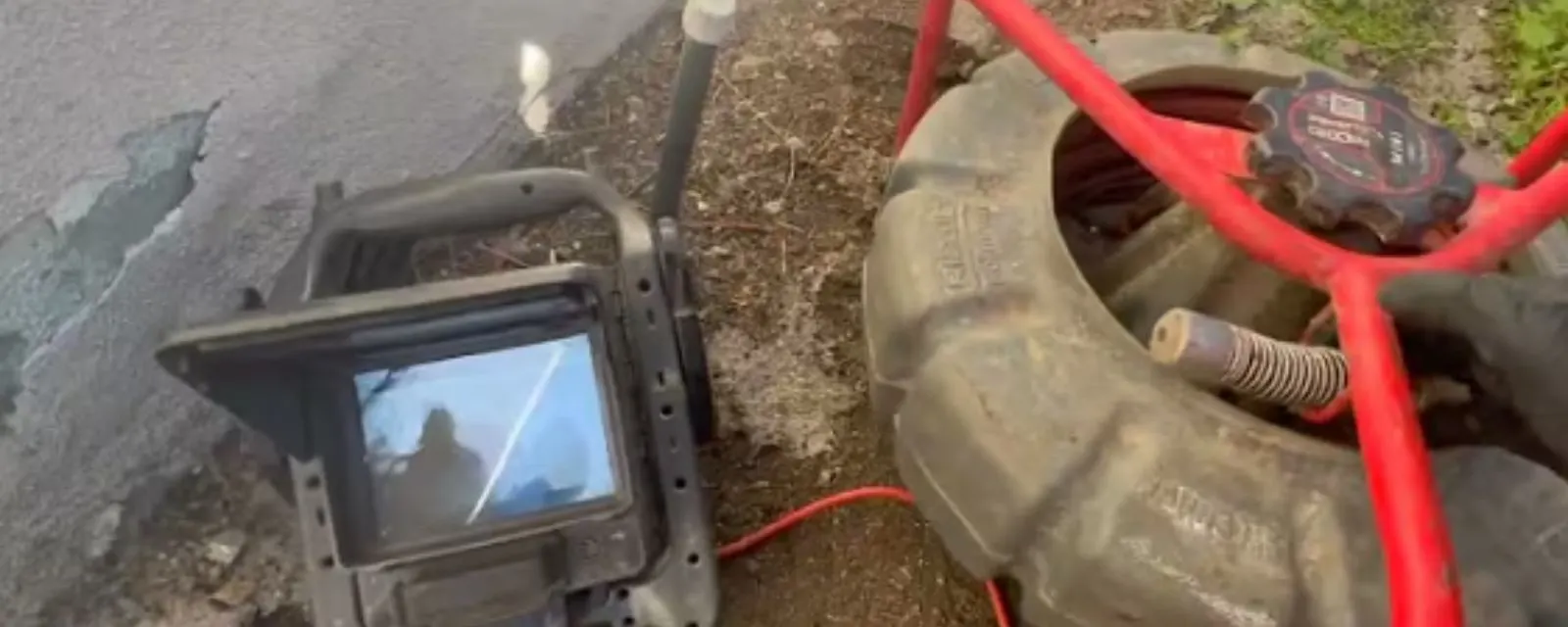
We run a camera through the line from the cleanout and watch the video. It shows roots, a cracked pipe, a sag where water pools, a joint that has separated and where the problem sits along the run. We note the distance to the problem and, when asked, locate it above ground.
Our sewer inspection page explains the camera visit. The video is the basis for every repair choice, and you can see it yourself before agreeing to anything.
Repair options
| Problem | Typical repair | Disruption |
|---|---|---|
| Roots in a sound pipe | Cut roots, then clean | Low |
| One cracked or broken section | Spot repair by digging | Moderate |
| Long run of cracks or joints | Trenchless lining or replacement | Low to moderate |
| Collapsed or heavily bellied pipe | Dig and replace | High |
Trenchless methods avoid digging up the whole yard. They are not always possible. A collapsed pipe or a severe belly usually needs excavation. The camera video tells us which applies.
Sewer backing up now?
Call the 24/7 line in Chelmsford.
Cleaning before repair
Many lines need clearing before they can be inspected or lined. High-pressure water, as described under hydro jetting, scours the pipe wall. It can also reveal weak spots, which is why it is often followed by a second camera pass.
Cleaning on its own does not fix a damaged pipe. If the line keeps blocking after a clean, repair is the next question.
Questions to ask before approving a sewer repair
- Can I see the camera video that shows the problem?
- Is the repair a spot fix, a lining or a full replacement, and why?
- What happens to my yard, driveway or landscaping?
- Is a permit needed, and who pulls it?
- What does the repair warranty cover, in writing?
Good contractors answer these without hesitation. If someone recommends a large excavation without showing you a video, get a second opinion.
Preventing the next backup
A repaired line still has to live with what goes into it. Keep grease out of the kitchen drain, flush only paper and human waste and plant trees away from the lateral. Roots find leaks, and a few feet of distance helps more than most people expect.
If the line has a history of backups, a periodic cleaning and a camera check after a repair keep small problems small.
Trenchless repair in plain terms
Two trenchless methods are common. In pipe lining, a resin-soaked tube is pulled into the old pipe and cured in place, creating a new pipe inside the old one. In pipe bursting, a tool pulls a new pipe through the old path while breaking the old pipe outward. Both reduce digging, but both need a pipe that is mostly intact and a layout that allows access at each end.
Lining narrows the inside diameter slightly, which rarely matters for a house lateral. Bursting needs more room to work. The camera video tells us which, if either, suits your line.
Insurance, records and resale
Keep the camera video, the invoice and any permit paperwork. A buyer's inspector will ask for them, and an insurer may ask for them if a claim follows a backup. A documented repair with a written warranty adds confidence at sale time.
Local notes for Chelmsford homes
The town's Sewer Division handles the public main, and its sewer emergency number is 978-250-5233. The town reports 190 miles of public sewer line and 41 pump stations. If neighbors on your street have the same backup, the blockage may be in the town main. If it is only your house, the problem is probably in your lateral.
Ask the Sewer Division where the town's responsibility ends and yours begins on your street. Before anyone digs on your property, Massachusetts requires a call to Dig Safe on 811. For help in nearby towns see Billerica and Tyngsborough.
Questions Chelmsford homeowners ask
If several fixtures back up at once or a floor drain overflows, suspect the main line.
Sometimes. Lining or pipe bursting avoids a trench, but a collapsed pipe needs excavation.
Generally the homeowner owns the lateral on their property. Ask the Sewer Division about your street.
Standard homeowner policies often exclude sewer line wear. Check your policy for a sewer backup rider.
Stop water use, keep everyone away and call the 24/7 line. Cleanup of sewage needs protective gear.
A spot repair can be done in a day. Longer runs take more.
Want the pipe inspected first?
A camera visit shows what is wrong before you decide.