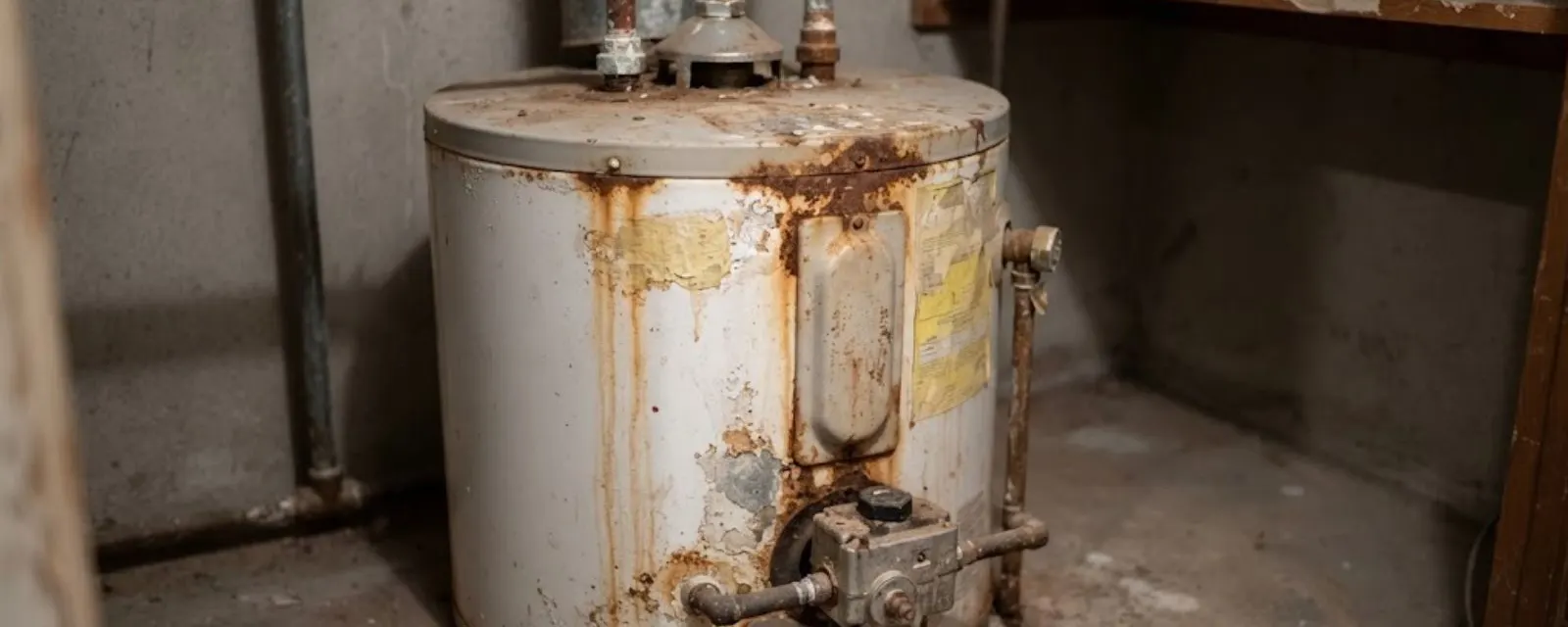
What an anode rod does inside your tank
Every storage tank water heater has a metal rod hanging inside the tank. It is called the anode rod, and its only job is to corrode so the steel tank does not. Water attacks metal, and the rod is built from magnesium or aluminum so that it gives itself up first. When it is gone, the tank wall becomes the next thing to corrode.
That is why this small part decides how long the heater lasts. A rod that is checked and replaced can keep a tank in service well past the point where an untouched one would start to leak. A rod that is ignored turns a repair into a water heater replacement and sometimes a flooded utility room. This guide explains how to check yours, what the work involves and when to skip it.
How to tell the rod is used up
A healthy rod is thick and covered in a light coating. A spent rod is thin, pitted or reduced to a bare steel core wire with chunks missing. Most rods last somewhere between three and five years, but that depends on your water and on how much hot water the house uses.
| What you see | What it means | What to do |
|---|---|---|
| Rod thick, light coating | Plenty of life left | Check again in a year or two |
| Rod thin or heavily pitted | Nearly spent | Replace the rod soon |
| Bare steel core wire | Fully spent | Replace now, then watch the tank |
| Rusty water or rotten egg smell | Rod reacting or tank corroding | Have a plumber inspect |
You can often spot trouble before you pull the rod. Rusty hot water, popping sounds from the tank and a sulfur smell on the hot side all point to corrosion or to the rod reacting with bacteria in the tank.
What the job involves
- Shut off fuel and powerTurn the electric breaker off or set the gas control to pilot, then close the cold supply valve.
- Relieve pressure and drain a few gallonsOpen a hot faucet upstairs and drain enough water to drop the level below the rod head.
- Break the rod looseThe hex head is often seized and needs a long breaker bar or an impact wrench. Many rods are overtightened at the factory.
- Check the rod and fit the new oneCompare against the old rod, wrap the threads with plumber's tape and torque it back in.
- Refill and restoreFill the tank fully with a hot faucet open, then restore fuel or power and check for drips.
Most of the effort is clearance. Many heaters sit under a low ceiling or inside a closet, and a four-foot rod cannot be pulled straight up. A flexible rod made of linked segments solves that. We carry both types and pick based on what the space allows.
Magnesium, aluminum or powered rods
Magnesium rods protect best in softer water and often come with the heater. Aluminum rods last longer in harder water but are not a good fit for everyone. Powered anode rods use a small electrical current instead of sacrificing metal. They cost more and need a plug, but they do not wear out the same way.
A plumber matches the rod to your water and your tank. If you are not sure which you have, ask your water district for its annual water quality report, which lists what is in the water, and bring that to the visit.
Water heater leaking?
Shut off the supply and call the 24/7 line in Chelmsford.
When replacing the rod is not worth it
An anode rod only helps while the tank is sound. If the tank is already leaking from a seam, replacing the rod saves nothing. A tank past ten to twelve years, or one with rust at the base or around the fittings, is usually better replaced than repaired.
- The tank has a leak from the shell or bottom, not from a fitting.
- The unit is more than ten to twelve years old and has never had the rod checked.
- Sediment is so heavy that the burner or elements keep failing.
- The warranty is gone and an efficiency upgrade is due anyway.
In those cases we talk through water heater installation options, including tankless units if the house suits one.
Local notes for Chelmsford homes
Chelmsford is not served by a single water supplier. The Chelmsford Water District, the North Chelmsford Water District and the East Chelmsford Water District each run their own system, so the water in your tank depends on which district bills you. Water suppliers publish an annual water quality report every year, so ask yours for the current one and look at the minerals it lists.
We do not guess your water hardness from your ZIP code. If the report lists hardness and your rod is disappearing quickly, that points toward an aluminum or powered rod. If it lists nothing useful, test your tap or ask the district. In Massachusetts only a licensed plumber may replace the heater itself.
Water heater makers publish maintenance guidelines for anode rods, and the U.S. Department of Energy suggests a 120 degree Fahrenheit setting for most homes.
Questions Chelmsford homeowners ask
Check it every two to three years and replace it when it is badly worn. Rods wear faster in some water and when hot water use is high.
Many homeowners do. The rod is often seized and the space is tight, so a plumber with the right tools can save a damaged tank or a flooded floor.
The part is inexpensive. The labor depends on access and whether the rod is seized. We quote the job on the phone and confirm at the tank before starting.
No. It protects a sound tank from future corrosion. A tank already leaking from the shell should be replaced.
Look at your water bill. The Chelmsford Water District, the North Chelmsford Water District and the East Chelmsford Water District each bill their own customers, and each publishes its own quality report.
It can. Softened water can wear a rod faster, so check yours more often if the house has a softener.
Not sure if the rod is worth saving?
A plumber can look at the tank and give you a straight answer. Nearby we also serve Westford and Billerica.